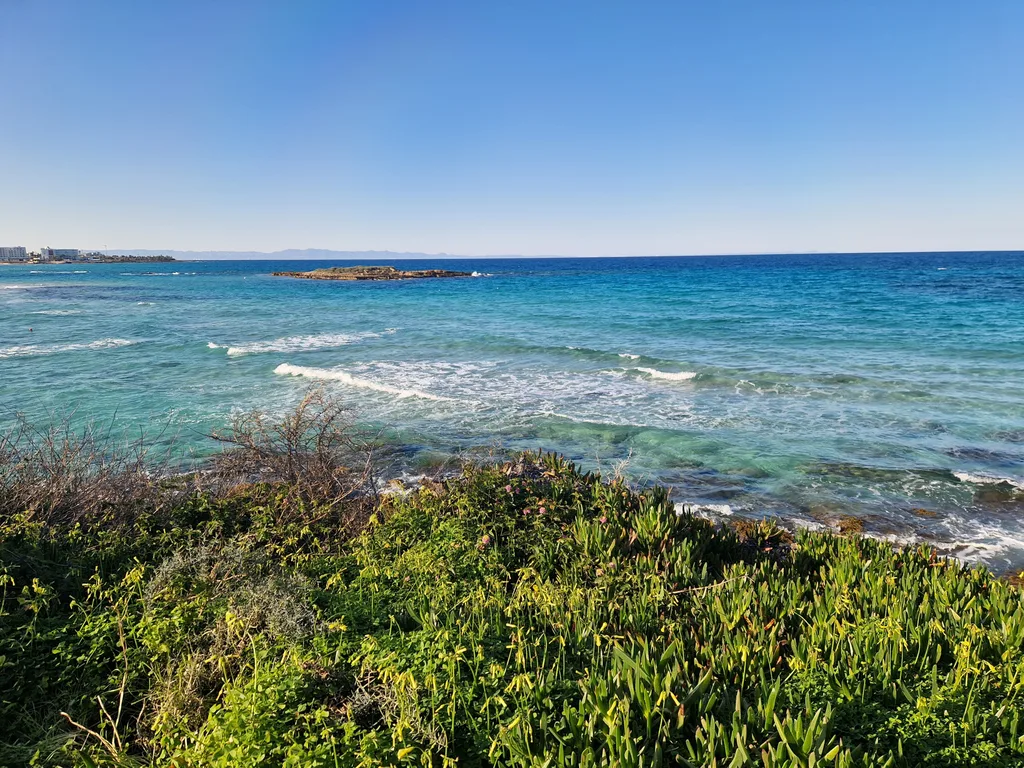
"Is the water clean?" has a more precise answer than most holiday questions. Every coastal bathing site in the EU is sampled through the season and given an official rating. We hold 13,257 of them — here is what the 2025 ratings say about the Mediterranean.
What the rating measures
Under the Bathing Water Directive, national authorities sample each site through the bathing season and the European Environment Agency classifies it as excellent, good, sufficient or poor. The test looks for two indicators of faecal contamination — E. coli and intestinal enterococci.
Two things it is not. It says nothing about litter, seaweed, jellyfish or microplastics. And it is not a reading for the day you arrive: the classification is calculated from up to four seasons of samples, so it describes a site's record rather than its water this morning.
The 2025 picture
Filtering our copy of the EEA assessments to coastal sites inside the Mediterranean basin gives 9,636 with a 2025 classification:
- 92.1% rated excellent — 8,878 sites
- 5.7% good, 1.3% sufficient
- 0.9% rated poor — 85 sites
By country, counting only each one's Mediterranean coast:
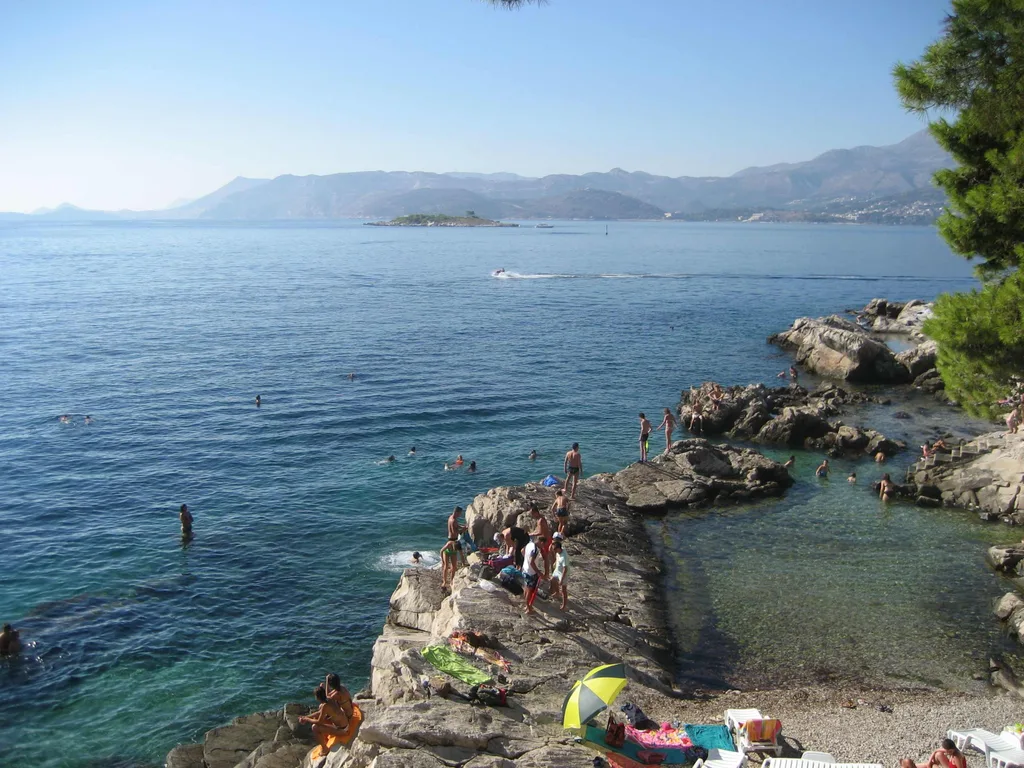
- Cyprus — 100.0% excellent, across 123 assessed sites
- Croatia — 98.7% excellent, across 856 assessed sites
- Greece — 97.5% excellent, across 1,726 assessed sites
- Bulgaria — 96.7% excellent, across 92 assessed sites
- Italy — 90.7% excellent, across 4,746 assessed sites
- Spain — 90.4% excellent, across 1,153 assessed sites
- Malta — 88.5% excellent, across 87 assessed sites
- France — 83.9% excellent, across 853 assessed sites
These differ from the national figures published elsewhere, because those fold in Atlantic and Channel coasts. Spain rates 92.2% across all its coasts but 90.4% on its Mediterranean shore alone; France moves the other way, 77.6% nationally against 83.9% on its Mediterranean coast.
Where the exceptions are
Poor ratings are rare and they cluster. Of the 85 across the basin, 65 are in Italy, 11 in France and 9 in Spain. Cyprus, Croatia, Greece, Bulgaria and Malta recorded none at all. Our data records the rating, not the cause, so we will not guess at why.
A further 155 sites carry no 2025 classification. That almost always means too few samples were taken, not that something was found — which is why we show nothing at all rather than a warning.
How to use it
A national average is a poor guide to one beach. Ratings are per monitoring point, and two hotels a kilometre apart on the same bay can sit beside points with different records. Where we hold the rating for the point nearest a hotel, it is on that hotel's page with the season it belongs to — never as an unqualified "excellent", which a rolling four-year assessment does not support.